
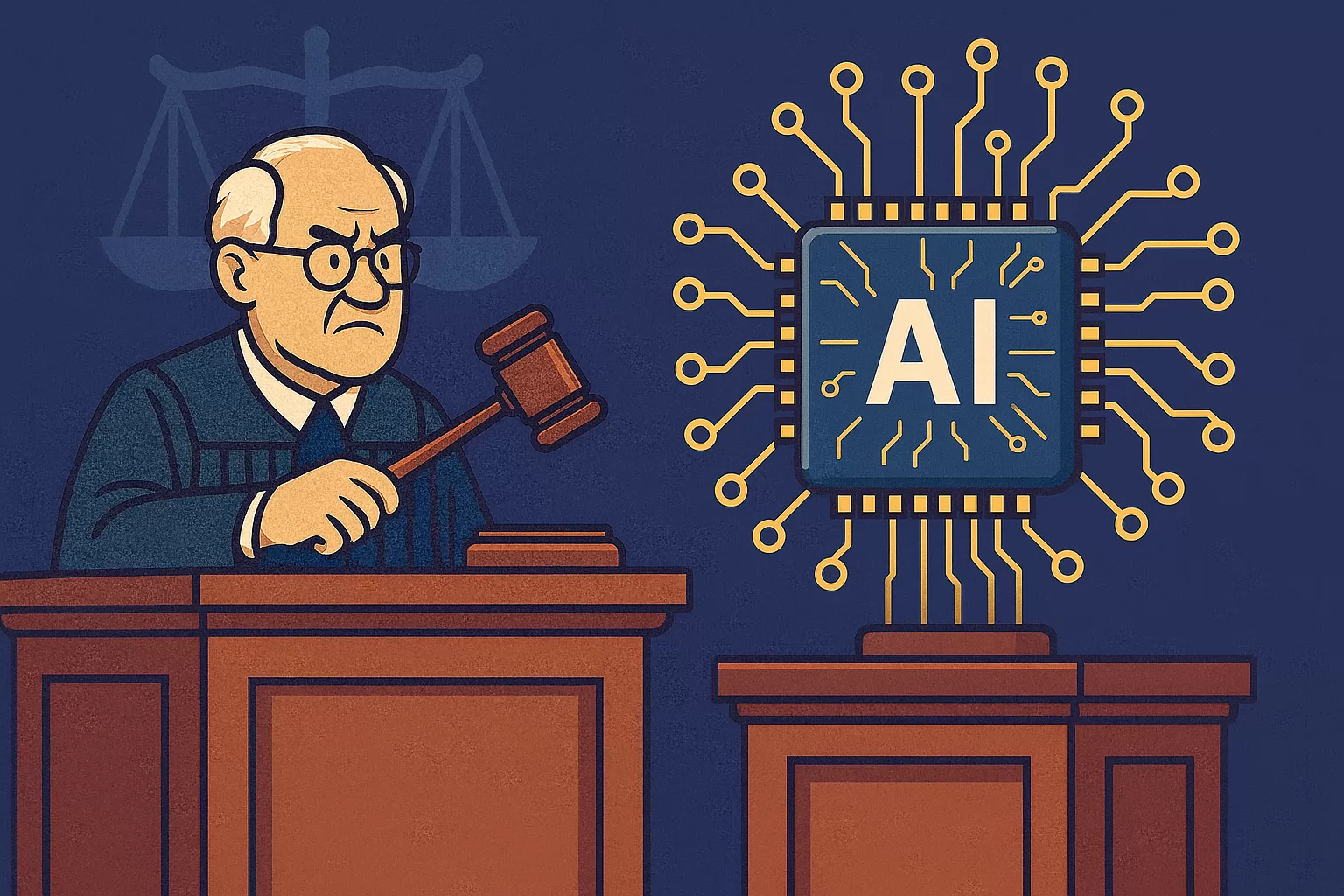
Artificial intelligence firm Anthropic has agreed to pay $1.5 billion to settle a class-action lawsuit brought by book authors who accused the company of pirating their works to train its Claude chatbot. If approved in court, this will be the largest copyright recovery in U.S. history and the first major settlement of the AI era.
The company will pay authors roughly $3,000 each for an estimated 500,000 books it downloaded without permission, largely through the Books3 dataset and other piracy libraries. As Judge William Alsup ruled in June, Anthropic’s act of acquiring these books was “wrongful,” even if the training of AI models itself wasn’t automatically illegal.
We covered the extent of the accusations and allegations a while ago, focusing on copyright and explained this case from lens of companies and creators alike. However, for the first time, one of the largest AI companies has been forced to confront the true cost of building billion-dollar models on the backs of uncompensated creators.
Why Books Matter to AI
For those still under the illusion that books are quaint, dusty relics to be left on your parents’ shelves, let me underline what every researcher already knows: books are the lifeblood of information. What do we use to train our LLMs?
For a machine, unlike blog posts or tweets, books offer depth, coherence and narrative structure. Books contain billions of carefully arranged words that for creating the scaffolding of complex reasoning. Without them, these systems would struggle to perform the feats of context and style that make them useful in the first place (for example, AI systems and their ability to generate long-form, accurate text or manage research outputs). A complex and structured library of information is like a protein fuel diet for training LLMs.
Judge Alsup’s decision in June revealed just how aggressively Anthropic leaned on that fuel. The company had knowingly downloaded more than 7 million pirated books. It began with nearly 200,000 from the notorious Books3 dataset, assembled by researchers to approximate the collections powering ChatGPT. Among them was The Lost Night, the debut thriller by Andrea Bartz, one of the lead plaintiffs in the case. Anthropic later expanded its haul, taking at least 5 million copies from Library Genesis (LibGen) and another 2 million from Pirate Library Mirror.
Did we see this coming?
When I covered Disney and Universal v. Midjourney earlier this year, I argued that these lawsuits were not fringe distractions but existential threats. I noted then that Midjourney’s likely reliance on “transformative use” as a defense would crumble under closer legal scrutiny.
The Anthropic case might now confirm that trajectory. Judge Alsup didn’t care about lofty theories of transformation when the foundation was built on piracy. I wonder if pattern is becoming clear: courts are willing to tolerate AI experimentation, but not when it rests on unauthorized (or involuntary) copying.
It’s important to be blunt: this settlement does not suddenly guarantee protection for every form of creative labour. The decision hinges on one narrow fact: that Anthropic knowingly acquired pirated books. The court didn’t rule that scraping copyrighted images, audio, or video is categorically unlawful. Nor did it establish that training itself is infringement.
This means, taking into account the trending lawsuits, visual artists suing Stability AI, musicians fighting over dataset use, or Hollywood studios battling Midjourney and OpenAI are still in limbo. Nothing about this settlement automatically covers them.
In other words: authors won a historic victory, but other creative fields are still exposed. The AI industry continues to operate in a gray zone about the use of data training materials, pushing the boundaries until eventually dragged into court.
Industry Impact: The Billion Dollar Domino
Anthropic’s settlement may be the first, but it surely won’t be the last. The case exposed the fragile defenses AI companies keep leaning on:
- The “transformative use” myth: Developers argue that outputs are transformative, so inputs don’t matter.
- The “everybody does it” excuse: From OpenAI to Meta, countless firms probably have ingested the same datasets.
- The “innovation requires it” claim: Courts don’t care if piracy is convenient for faster model training. The ends justify the means, I guess.
If losing at trial could have financially impacted Anthropic, what happens to smaller firms? Stability AI is already under legal siege. OpenAI faces lawsuits from the New York Times and the Authors Guild. Will this collapse in domino effects of severe financial penalties?
Creators: Symbolic Justice
For authors, the settlement feels like long overdue recognition. Half a million writers, many of whom never expected compensation for their books scraped into oblivion, will receive checks. $3,000 per book is far from transformative wealth, but it’s validation that their work has value. It hopefully se4ts a boundary of what can be used as “training data.”
Still, the outcome is bittersweet. The structure of the deal avoids establishing a lasting precedent for licensing or royalties. This is a one-time payout, not a framework for ongoing compensation. Writers win today, but the industry has not yet solved the underlying problem: how to ensure that creators are consistently and fairly paid in the age of generative AI or have an option to opt out of it.
Regulators: Watching Closely, Acting Slowly
Europe has already moved with the AI Act, which will force disclosures about training data and set stricter transparency requirements. The U.S., meanwhile, continues to rely on voluntary codes and handshakes with industry leaders.
This settlement shifts the balance a little. Lawmakers now have proof that courts can hold AI companies accountable. We might expect fresh pressure in Washington for stricter rules around dataset disclosure, licensing obligations, and clearer definitions of infringement.
The Anthropic case also undercuts the tech sector’s lobbying narrative that copyright battles are “edge cases” distracting from AI’s potential. AI systems are only as powerful as the material they consume. If that material is stolen, then theft is their foundation.
What do we need to ask?
Even after $1.5 billion, critical questions remain unanswered:
- Will future models need licensed datasets? Anthropic and its peers insist licensing is impractical, but courts may disagree as precedent builds.
- What happens to other art forms? Images, music, films, code, none of these categories are shielded by this ruling.
- Can AI survive without infringement? Many current business models might collapse without vast, unlicensed datasets. Paywalls and royalties would make training exponentially more expensive.
The Ethical Reasoning
The case also forces us to confront a hypocrisy that has defined AI’s rise. Companies might wrap themselves in the language of “safety” and “humanity’s future.” Yet when building their models, they raided the intellectual commons without consent, credit or compensation. Maybe mentioned something obscure in Terms and Services, that we all agree to automatically?
And while Anthropic now pays up, nothing stops others from repeating the pattern until they’re sued. Copyright law has become the only line of defense for creators because industry self-regulation was never real.
Copyright is not a minor inconvenience. Until regulation forces consent, transparency, and fair compensation, lawsuits might remain the only effective tool to see how systems were trained. However, litigation alone won’t fix the imbalance. We need to educate ourselves about what has already been scraped into these systems, demand visibility into future training sets and secure real choices to opt out of the data economy if we never consented to join.



I’d be curious to see the list of books that the used as “input”. Also, the $3000.00 a book settlement is a pittance to each author of the books. Though, most likely the money will largely go to the lawyers, and the publisher, not actually to the authors. Basically, the authors are getting the commission agreed upon for the sale of the single book that was used to train the LLM. A very sad story, or a tragedy. 🫣